
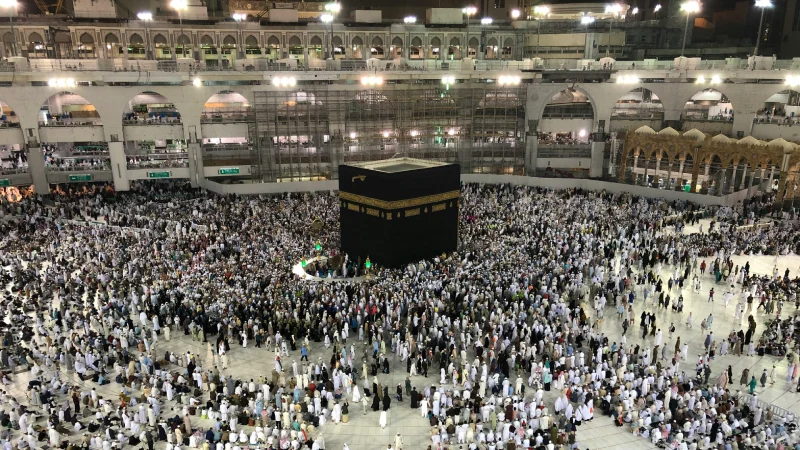
Hajj as a Symbol of Islamic Unity
Hajj is one of the greatest acts of worship in Islam. It is not only a sacred journey to Makkah, but also a powerful living example of unity, equality, submission, and brotherhood. Every year, millions of Muslims gather for the same purpose, wear simple clothing, follow the same rites, and stand before Allah with the same hope for mercy and forgiveness. Saudi Arabia's Ministry of Hajj and Umrah describes Hajj as a highly organized worship journey for the Guests of Allah, and the official Nusuk Hajj platform presents it as a unified path for pilgrims from serviced countries through authorized providers. (haj.gov.sa)
What makes Hajj so special is that it removes the barriers people usually carry in daily life. During Hajj, race, language, wealth, nationality, and social rank lose their worldly weight. The heart of the pilgrim turns to one Lord, one qiblah, and one shared declaration of faith. This is why Hajj stands as one of the clearest symbols of Islamic unity.
The Sacred Foundation of Hajj
The roots of Hajj lie in the legacy of Prophet Ibrahim (peace be upon him), whose obedience, sacrifice, and devotion remain central to the pilgrimage. In Islam, Hajj is not a cultural gathering or historical festival. It is a pillar of the religion and an obligation once in a lifetime for every Muslim who can perform it. Scholars state this clearly, and the obligation of Hajj for the able Muslim is well established in Islamic teaching. (Islam-QA)
This foundation matters because it shows that Hajj is built on obedience, not symbolism alone. Its message of unity comes from worshipping Allah together as He prescribed.
How Hajj Creates Unity Among Muslims
The unity of Hajj is not just emotional. It is visible in every stage of the pilgrimage.
Pilgrims come from different continents, speak different languages, and belong to different cultures. Yet they all answer the same call. They enter ihram, make talbiyah, perform tawaf, stand at Arafat, and complete the rites in a shared pattern of devotion. The official Nusuk Hajj rituals guide explains that tawaf symbolizes the unity of the Muslim community and their devotion to Allah. (hajj.nusuk.sa)
This unity reflects the Quranic message that human beings were created as different nations and tribes so they may know one another, while true honor is based on righteousness, not status or origin. (Quran.com)
The Meaning Behind the Symbols of Hajj
Hajj is full of powerful symbols, and each one teaches the believer something about faith and unity.
Ihram
Ihram strips away visible signs of status and luxury. In this state, pilgrims look similar, live similarly, and remember that, before Allah, all people are equal in their human weakness and need. The official ihram guide from the Ministry of Hajj explains that entering ihram is the act of worship for Hajj or Umrah, performed with intention and talbiyah. (haj.gov.sa)
Tawaf
When pilgrims circle the Kaaba together, they move as a single body around a single center. This act reflects what Muslim life should be: Allah at the center, and the believers united around His guidance. Official Hajj guidance explicitly describes tawaf as symbolizing Muslim unity. (hajj.nusuk.sa)
Sa'i
The walking between Safa and Marwah teaches struggle, trust, and perseverance. It reminds pilgrims that relief comes from Allah, even when the road feels difficult.
Arafat
The standing at Arafat is one of the deepest moments of Hajj. It reminds pilgrims of the Day of Judgment, when all people will stand before Allah with no worldly titles to save them. It is a moment of tears, repentance, and sincere return.
Jamarat and Sacrifice
The stoning of the pillars reflects rejection of Shaytan and disobedience. The sacrifice reflects submission and willingness to obey Allah above personal desire. These rites are not empty movements. They train the soul to choose obedience over ego.
Hajj Teaches Equality and Brotherhood
One of the most beautiful messages of Hajj is that no Muslim is higher than another because of race, wealth, language, or country. The rich and poor wear similar garments. The educated and uneducated stand in the same places. The powerful and the unknown call upon the same Lord.
This equality is not theoretical. It is lived in real time. Hajj trains the believer to see fellow Muslims as brothers and sisters, not as strangers divided by nationality or culture. That is why Hajj remains one of the strongest living demonstrations of Islamic brotherhood in the world.
The Spiritual Benefits of Hajj
Hajj changes the heart of the sincere pilgrim. It brings humility, softens pride, strengthens tawakkul, and renews repentance. Islamic scholars also highlight the immense virtue of accepted Hajj and the forgiveness connected with sincere pilgrimage. (Islam-QA)
For many believers, Hajj becomes a turning point in life. It reminds them that this world is temporary, that Allah's mercy is greater than their sins, and that the believer's real success is not in status but in nearness to Allah.
Lessons of Hajj for Daily Life
The lessons of Hajj should not end when the pilgrim returns home. A successful Hajj leaves marks on daily character.
It teaches patience in difficulty, discipline in worship, kindness in crowds, and control over anger. It teaches that unity is not just a slogan, but a responsibility. It teaches that true honor lies in taqwa, not in appearance or wealth. And it teaches that a Muslim should live with purpose, sincerity, and obedience.
A pilgrim who learns these lessons properly returns with a new outlook. The journey may end, but its message should continue in family life, business dealings, community behavior, and personal worship.
The Challenges of Hajj and the Beauty of Its Reward
Hajj is not always easy. It demands effort, patience, physical strength, organization, and emotional control. There are crowds, schedules, long walks, and moments of exhaustion. Yet these hardships are part of its beauty. They teach surrender, endurance, and gratitude.
The reward, however, is far greater than the struggle. The believer endures temporary difficulty for a lasting spiritual gain. This balance of hardship and reward is one reason Hajj leaves such a strong effect on the soul.
Final Reflection
Hajj is far more than a journey of movement from one place to another. It is a journey from pride to humility, from distraction to remembrance, and from division to unity. It gathers the Ummah in one of the clearest visible signs that Islam is a religion of brotherhood, equality, devotion, and peace.
When Muslims stand together in Hajj, they show the world something powerful: despite their differences, they are united by one faith, one Book, one Prophet, and one Lord. That is why Hajj is not only a pillar of Islam. It is also one of the greatest symbols of Islamic unity.