
Abu Simbel Temples: The Timeless Glory of Pharaoh Ramses II in Egypt
The Abu Simbel Temples are among the most breathtaking monuments of ancient Egypt. Located in southern Egypt near the border with Sudan, these temples stand as a powerful symbol of royal authority, architectural brilliance, and deep religious devotion.
Carved directly into a massive rock cliff, the temples reflect the عظمت (grandeur) of the New Kingdom period. Built by one of Egypt’s greatest rulers, Ramses II, they continue to inspire visitors from around the world.
The History Behind Abu Simbel Temples
The Abu Simbel Temples were constructed during the 13th century BC under the command of Pharaoh Ramses II.
The construction began around 1264 BC and took nearly 20 years to complete. The complex consists of two temples.
The Great Temple was dedicated to powerful Egyptian gods such as Amun, Ra-Horakhty, and Ptah, as well as Ramses II himself. The smaller temple was dedicated to Queen Nefertari, one of the most beloved queens in ancient Egypt.
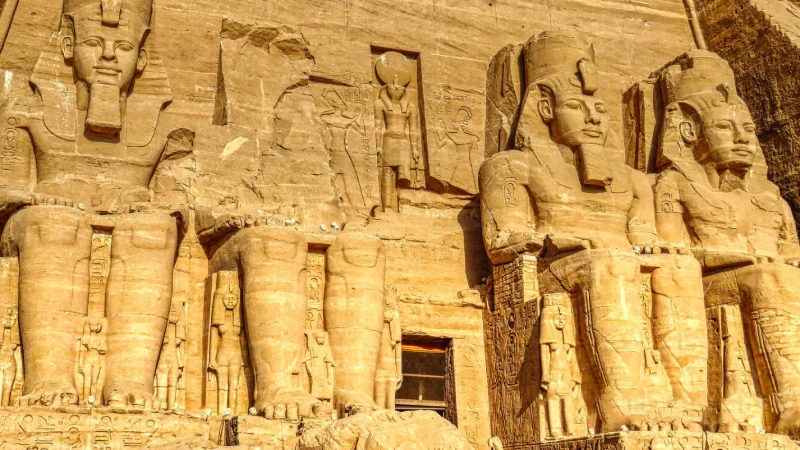
The front of the Great Temple features four colossal statues of Ramses II, each over 20 meters tall. These statues were designed to demonstrate his power, authority, and divine status.
The temples were not just religious centers. They were also political symbols meant to impress and influence neighboring regions.
A Masterpiece of Ancient Engineering
The Abu Simbel Temples are a true marvel of ancient engineering.
Carved directly into solid rock, they showcase the incredible skill and precision of ancient Egyptian craftsmen. The walls are decorated with detailed carvings that depict battle scenes, royal ceremonies, and offerings to the gods.
These artistic details provide valuable insights into the beliefs, culture, and achievements of ancient Egypt.
The temples reflect a deep connection between religion, power, and artistic expression.
The Remarkable Relocation of Abu Simbel
One of the most extraordinary chapters in the history of Abu Simbel is its relocation.
In the 1960s, the construction of the Aswan High Dam threatened to submerge the temples under water. To protect this priceless heritage, an international effort led by UNESCO was launched.
Between 1964 and 1968, the entire temple complex was carefully cut into massive blocks and moved to a higher location.
Each block, some weighing up to 30 tons, was reassembled with incredible precision. This project is considered one of the greatest achievements in modern archaeological preservation.
Cultural and Spiritual Significance
The Abu Simbel Temples are more than just historical monuments. They represent the spiritual and cultural identity of ancient Egypt.
The Great Temple’s design includes a remarkable solar alignment. Twice a year, sunlight reaches deep into the sanctuary and illuminates the statues inside.
This phenomenon reflects the advanced knowledge and precision of ancient Egyptian builders.
The smaller temple dedicated to Queen Nefertari is also highly significant. It is one of the rare temples in Egypt dedicated to a queen, showing her importance and elevated status.
Together, the temples offer a powerful insight into ancient Egyptian beliefs, devotion, and royal symbolism.
Visiting Abu Simbel Today
Today, Abu Simbel is one of the most popular tourist destinations in Egypt.
Visitors come from across the world to witness its massive statues, detailed carvings, and historical significance.
The best time to visit is early morning, when the sunlight enhances the beauty of the temple façade.
The site is accessible by road, air, and boat, and guided tours are available to help visitors understand its deep historical context.
One of the most special experiences is the Abu Simbel Sun Festival, held twice a year. During this time, visitors can witness the incredible solar alignment inside the temple.
Why Abu Simbel Still Inspires the World
The Abu Simbel Temples continue to inspire because they represent human creativity, determination, and devotion.
They remind us of a time when architecture, religion, and leadership were deeply connected.
The temples stand as a timeless example of how civilizations express their beliefs and values through art and construction.
For many travelers, visiting Abu Simbel is not just a journey through history. It is an experience that connects them to one of the greatest civilizations ever known.
Explore Abu Simbel with Zamzam Travels BD
If you are planning to explore Egypt’s ancient wonders, including the Abu Simbel Temples, Zamzam Travels BD can help you arrange a smooth and enriching journey.
We provide complete travel services including visa processing, air tickets, hotel accommodations, and guided tours. Our customized packages allow you to combine your Umrah journey with cultural exploration across Egypt, Turkey, and beyond.
Start your journey today: https://zamzamtravelsbd.com/