
Ghar-e-Shajda in Madinah: History, Location, and Visitor Guide
Ghar-e-Shajda is a historical ziyarah site in Madinah, not a general desert cave somewhere between Makkah and Madinah. Your draft has a useful starting idea, but it includes some details that would be better corrected before publishing. Current landmark references identify it with the Cave of Bani Haram, also known as the Cave of Prostration, on or near the slopes of Mount Sila in Madinah, close to the site of the Battle of the Trench. (Islamic Landmarks)
For pilgrims and history lovers, this site is meaningful because it is linked in local and devotional tradition to the Prophet Muhammad ﷺ during the days of Ghazwat al-Khandaq. It is usually included as part of a Madinah ziyarah route, especially with nearby Khandaq-related sites. (Islamic Landmarks)
What Is Ghar-e-Shajda?
Ghar-e-Shajda, often written as Ghar-e-Sajda or Ghaar-e-Sajdah, is commonly identified with the Cave of Bani Haram in Madinah. Your draft correctly connects the site to the Bani Haram area, but the location should be described more precisely as in Madinah, near Mount Sila and the Khandaq area, not as a broad Saudi desert landmark. (Islamic Landmarks)
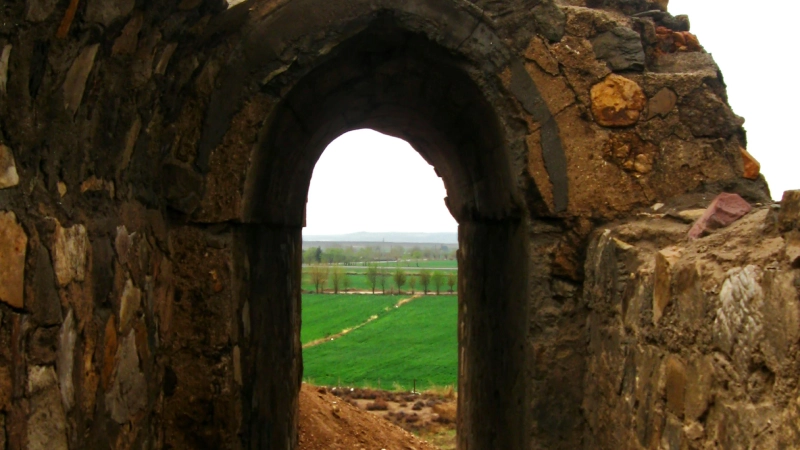
The name “Cave of Prostration” comes from a devotional tradition associated with the Prophet ﷺ and his supplication. Some modern guides also note that the original cave is no longer preserved in its original open form and that what visitors see today may be a small structure or a marked area associated with the historic site. (Islamic Landmarks)
Historical Significance of Ghar-e-Shajda
The strongest historical association of Ghar-e-Shajda is with the Battle of the Trench in Madinah. The area of Bani Haram and Mount Sila overlooks the Khandaq zone, which is why this site is often included in Islamic history tours. (Islamic Landmarks)
Your draft says the cave is linked to important early Islamic events, and that is fair. Still, the safest way to present it is this: the site is traditionally associated with the Prophet ﷺ during the period of Khandaq and is valued as a reflective historical landmark rather than as a place tied to a single, unanimously documented ritual event in the strongest primary sources. (Islamic Landmarks)
That wording is more authentic and trustworthy for your website.
Location and Accessibility
Ghar-e-Shajda is best described as being in Madinah, near the Seven Mosques / Khandaq area, on or close to the slopes of Jabal Sila. It is not a practical day-trip landmark from Makkah in the way your draft suggests. For most visitors, it is seen during a Madinah local ziyarah tour. (Islamic Landmarks)
Because access may be limited or the site may be viewed from nearby rather than entered freely, it is wise not to promise visitors that they will always be able to go inside. Some tour descriptions explicitly mention that access can be difficult and that many pilgrims mainly view it from the vicinity of the Khandaq landmarks. (cosmic.beesocialpk.com)
Architectural Features
Your draft describes a modest natural cave with a calm interior. That may reflect older or devotional descriptions, but for a stronger blog, it is better to avoid over-describing the interior unless personally verified. A more accurate approach is to say that the site is historically identified as a small cave or cave location associated with Bani Haram and Mount Sila, valued more for its historical and spiritual memory than for grand architecture. (Islamic Landmarks)
Why Pilgrims Visit Ghar-e-Shajda
Pilgrims usually visit Ghar-e-Shajda as part of a broader Madinah ziyarah experience. The appeal of the site lies in:
- Its connection with early Islamic history
- Its association with the Khandaq area
- the reflective atmosphere of the Bani Haram and Mount Sila surroundings
- Its inclusion in visits alongside nearby mosques and battle landmarks
Your draft rightly emphasizes reflection, faith, and historical connection, and that is a good direction for the article.
Bani Haram and the Site’s Historical Context
The connection with Bani Haram is one of the more reliable parts of the draft. Current landmark references link the cave directly to the Bani Haram area of Madinah. (Islamic Landmarks)
This is valuable because it places Ghar-e-Shajda within a real historical neighborhood connected to the Ansar and to the wider defense of Madinah during the Battle of the Trench.
Nearby Ziyarah Places
This section of your draft needs some correction.
Al-Khandaq / Seven Mosques Area
This is the most natural nearby landmark cluster and should definitely remain in the article, as Ghar-e-Shajda is commonly associated with the Khandaq zone. (cosmic.beesocialpk.com)
Mount Uhud
Mount Uhud is also in Madinah and can be part of a separate ziyarah route, though it is not “next door” in the same immediate sense as the Khandaq landmarks.
Masjid Ayesha
This item should be removed from the “nearby” list in this article. The well-known Masjid Aisha (Masjid at-Tan‘im) is in Makkah, not a nearby Madinah stop on the Ghar-e-Shajda route. So this part of the draft is geographically incorrect.
A better nearby Madinah-related substitute would be:
- Masjid Al-Fath
- The Seven Mosques area
- Mount Sila
- Mount Uhud
- Masjid Quba
- Masjid Qiblatain
Travel Tips for Visiting Ghar-e-Shajda
Your draft’s practical travel tips are useful and mostly safe to keep in a cleaner version. The best guidance would be:
Visit during a local Madinah ziyarah trip, preferably with a knowledgeable guide. Wear modest and comfortable clothing. Carry water, especially in warm weather. Do not expect the site to function like a developed tourist attraction with structured ticketing or full visitor services. And treat the visit as a moment of reflection, not as a place for invented rituals.
Hotels and Airport Costing
This part of the draft should be simplified heavily.
The hotel suggestions mix Makkah and Madinah properties even though the site is in Madinah, and the airport taxi prices look too specific to publish confidently without current verification.
For a more professional blog, say this instead:
Since Ghar-e-Shajda is in Madinah, visitors usually stay in hotels near Masjid an-Nabawi and visit the site as part of a local ziyarah program. Transport cost depends on route, season, vehicle type, and whether the visit is included in a guided package.
That sounds more authentic and avoids publishing weak numbers.
Final Thoughts
Ghar-e-Shajda is best understood as a Madinah historical ziyarah site associated with the Cave of Bani Haram near Mount Sila and the Battle of the Trench area. Your original draft captured the spiritual tone well, but it needed corrections to locations, nearby landmarks, and a few overconfident travel details.
For your website, the strongest version is one that presents Ghar-e-Shajda as a place of reflection within the sacred history of Madinah, not as a fully developed tourist destination with fixed commercial details. That will make the article more credible, more useful, and better aligned with your premium blog style.