
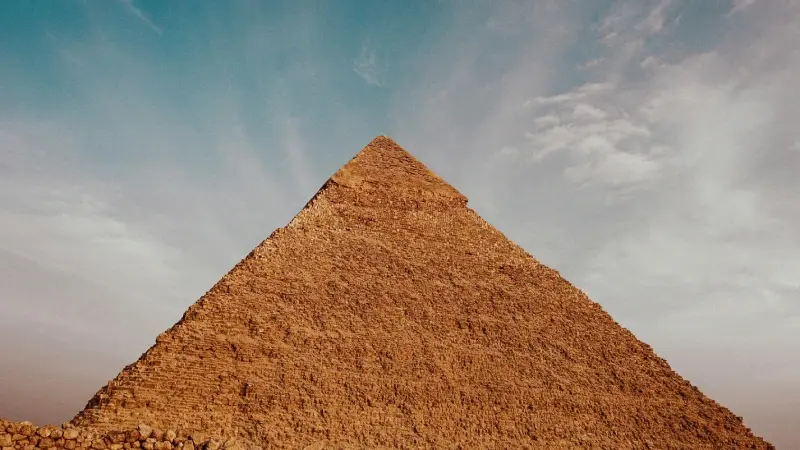
The Giza Great Pyramid is one of the most extraordinary achievements in human history. Built over 4,500 years ago, it stands as a powerful symbol of ancient Egyptian civilization, engineering brilliance, and human ambition.
Located on the Giza Plateau near Cairo, this عظیم structure is the largest of the three pyramids and the only remaining wonder of the Seven Wonders of the Ancient World.
For centuries, it has inspired awe, curiosity, and deep fascination among travelers, historians, and researchers from across the globe.
The History of the Giza Great Pyramid
The Giza Great Pyramid was built during the Fourth Dynasty of ancient Egypt by Pharaoh Khufu, also known as Cheops.
Construction took place between 2580 and 2560 BC. The pyramid was designed as a royal tomb, reflecting the Egyptian belief in the afterlife and the eternal journey of the soul.
Originally, the pyramid stood at about 146 meters tall. Today, due to erosion and the loss of its outer casing stones, it stands at approximately 138 meters.
For more than 3,800 years, it remained the tallest man-made structure in the world, showcasing the unmatched skill of ancient Egyptian builders.
The Construction: A Marvel of Engineering
The construction of the Giza Great Pyramid is considered one of the greatest engineering feats in history.
It is estimated that around 2.3 million limestone blocks were used, with each block weighing between 2.5 and 15 tons.
Historians believe that a system of ramps was used to transport these massive stones into place. Contrary to older theories, modern research suggests that skilled laborers, not slaves, built the pyramid.
These workers were organized, well-fed, and worked in shifts over approximately 20 years to complete this massive project.
The precision of the construction remains astonishing even by modern standards.
Architectural Design and Internal Structure
The Giza Great Pyramid is not just a solid structure. It contains a complex internal design.
Inside the pyramid are several important chambers, including the King’s Chamber, the Queen’s Chamber, and the Grand Gallery.
These chambers are connected by narrow passageways, each designed with symbolic and functional purposes.
The pyramid is also aligned almost perfectly with the cardinal directions, reflecting the advanced understanding of astronomy and geometry possessed by ancient Egyptians.
This precision adds to the mystery and brilliance of the structure.
Religious and Cultural Significance
The Giza Great Pyramid holds deep religious meaning.
It was built to ensure the safe passage of Pharaoh Khufu into the afterlife. The structure reflects the belief that the ruler was not just a king, but also a divine figure.
The pyramid served as a symbol of power, authority, and spiritual connection between the pharaoh and the gods.
It also represents the عظمت of ancient Egyptian civilization and its dedication to religion, architecture, and eternal legacy.
The Mysteries of the Great Pyramid
Despite centuries of study, many mysteries still surround the Giza Great Pyramid.
One of the most debated features is the purpose of the air shafts found inside the pyramid. Some believe they were used for ventilation, while others suggest they had a symbolic connection to the stars.
The precision of the pyramid’s alignment and construction continues to puzzle experts.
Some theories even suggest advanced knowledge beyond what was expected for that time, though these ideas remain speculative.
These unanswered questions continue to add to the wonder and fascination of the Great Pyramid.
Visiting the Giza Great Pyramid Today
Today, the Giza Great Pyramid is one of the most visited landmarks in Egypt.
Visitors can explore the pyramid complex, which includes the pyramids of Khafre and Menkaure, as well as the famous Great Sphinx.
Tourists can walk around the pyramid, admire its massive structure, and even enter the interior to experience its chambers.
It is best to visit early in the morning or late in the afternoon to avoid extreme heat and crowds.
Standing before this ancient wonder is a powerful experience that connects visitors with one of the greatest civilizations in history.
Why the Giza Great Pyramid Still Inspires the World
The Giza Great Pyramid continues to inspire because it represents human determination, creativity, and belief.
It shows what can be achieved with vision, planning, and dedication, even without modern technology.
The pyramid is not just a monument. It is a legacy of human achievement that has stood the test of time.
For many, visiting this site becomes a once-in-a-lifetime experience filled with awe and reflection.
Explore Egypt’s Wonders with Zamzam Travels BD
If you are planning to explore the Giza Great Pyramid and other historical wonders of Egypt, Zamzam Travels BD can help you organize a smooth and enriching journey.
We provide complete travel services including visa processing, air tickets, hotel accommodations, guided tours, and ground transportation. Our customized packages allow you to combine your Umrah journey with cultural exploration across Egypt, Turkey, and beyond.
Start your journey today: https://zamzamtravelsbd.com/