
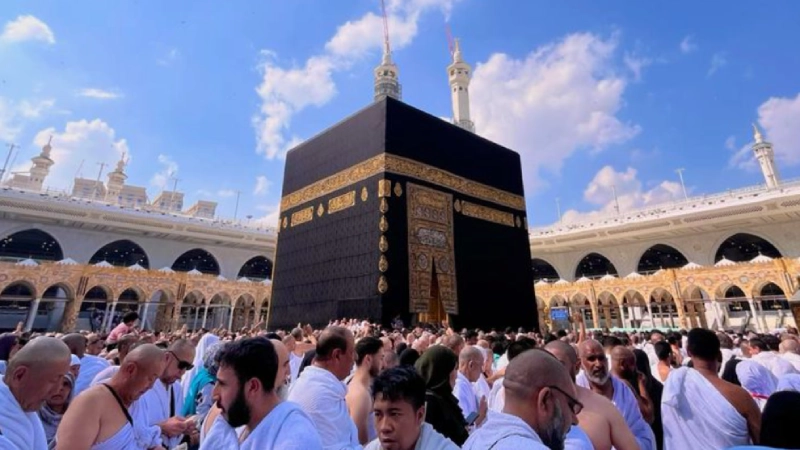
What Happens If Someone
Dies During Hajj? Islamic
View and Official Process
Hajj is one of the greatest acts of worship in Islam. Every year, millions of Muslims travel to Makkah in the hope of completing this sacred journey with faith, patience, and sincerity. Yet many people also ask a difficult but important question: what happens if someone dies during Hajj?
Death can happen at any time and in any place, even during the holiest journey of a Muslim's life. When that happens during Hajj, there are two sides to understand. One is the Islamic view, which speaks about the honor and hope connected to dying in a state of worship. The other is the official process, which includes reporting the death, preparing the body, issuing the death certificate, and either arranging burial in Saudi Arabia or repatriation to the home country.
Saudi public services include official systems for the transport and preparation of the deceased, and the guidance of foreign embassies confirms that death registration and documentation follow formal procedures. (balady.gov.sa)
The Islamic View of Death During Hajj
In Islam, death during a righteous act is viewed with hope and honor. The most authentic report on this topic is the hadith about a pilgrim who died while in ihram during Hajj.
The Prophet ﷺ instructed that he be washed with water and lotus leaves, shrouded in his garments, and not perfumed or covered on the head, because he would be resurrected on the Day of Judgment reciting "Labbaik." This shows a special status and a beautiful ending for the pilgrim who dies in that sacred state. (Sunnah.com)
At the same time, careful scholars do not usually say with certainty that every person who dies during Hajj is automatically a shaheed in the legal or technical sense. A more balanced formulation is that death during Hajj is a hopeful sign of a good ending, and that there is clear evidence of special reward for the pilgrim who dies in ihram. (islamweb.net)
What Happens First After a Pilgrim Dies?
When a pilgrim dies in Saudi Arabia, the death must be handled through formal channels. Saudi municipal services provide an official process for the transport and preparation of the deceased, including assigning the responsible body, arranging transport, and reserving the cemetery and funeral timing through the mortuary services system. (balady.gov.sa)
For foreign pilgrims, consular guidance also shows that after burial or death handling, the death is formally registered with the Saudi civil authorities, and a death certificate is then issued under standard procedure. (eoiriyadh.gov.in)
Is the Pilgrim Buried in Saudi Arabia?
In many cases, yes. Islamic burial is generally done as soon as reasonably possible, and embassy guidance for foreign nationals in Saudi Arabia says that burial is commonly handled in the city where the death occurred.
That same guidance notes that moving the body from one Saudi city to another is normally not permitted, except in exceptional cases with special approval. (eoiriyadh.gov.in)
Because of that, it is not accurate to assume that every pilgrim who dies in Makkah will automatically be buried in a particular famous cemetery. The burial location depends on the place of death, the official procedure, and the permissions available in that case. (eoiriyadh.gov.in)
Can the Body Be Sent Back Home?
Yes, repatriation is possible, but it is not immediate, and it requires paperwork and approvals. Embassy guidance says that transporting mortal remains from Saudi Arabia usually requires several clearances, including the death certificate and other official formalities, and that even natural-death repatriation often takes weeks.
In contrast, cases requiring investigation may take much longer. (eoiriyadh.gov.in)
Saudi government services also include a formal repatriation or body transfer service, which shows that repatriation is an official option rather than an informal arrangement. (my.gov.sa)
What Is the Role of the Family, Embassy, and Hajj Group?
The family is usually informed through the Hajj mission, hospital, guide, or relevant authorities. After that, the embassy or consulate helps with the civil documentation required for the deceased's home country, while the Hajj operator or group leader may help with communication and logistics.
Embassy guidance for foreign nationals in Saudi Arabia specifically notes the role of consular documentation after the Saudi death certificate is issued. (eoiriyadh.gov.in)
Funeral and Burial in Islamic Practice
If the deceased pilgrim was in ihram, the Sunnah guidance is clear: the body is washed, shrouded, and not perfumed; in the authentic reports, the Prophet ﷺ also instructed that the pilgrim's head not be covered. This is one of the most distinctive rulings related to a pilgrim who dies during Hajj. (Sunnah.com)
The funeral prayer is then offered in the normal Islamic way, and burial is carried out through the authorized process. Saudi municipal services explicitly state that the responsible department should arrange transport, preparation, cemetery reservation, and funeral timing. (balady.gov.sa)
A Balanced Islamic Understanding
The best way to explain this topic is with hope, humility, and accuracy. If someone dies during Hajj, Muslims may hope for a blessed ending and great reward. If the person died in ihram, there is authentic evidence of a special resurrection state connected to that worship.
But it is still better not to make absolute promises about martyrdom or forgiveness for a specific individual unless there is clear textual proof. (Sunnah.com)
Conclusion
So, what happens if someone dies during Hajj? Islam teaches that such a death is a serious but hopeful matter, especially if the pilgrim dies in a state of worship and ihram. An authentic hadith shows special honor for that pilgrim on the Day of Resurrection.
Officially, the death is handled through Saudi authorities, with transport and preparation of the body, death registration, documentation, and either burial in Saudi Arabia or repatriation if the family chooses, and approvals are completed. (balady.gov.sa)
For a website article, this version is stronger because it is more accurate, more balanced, and more trustworthy.