
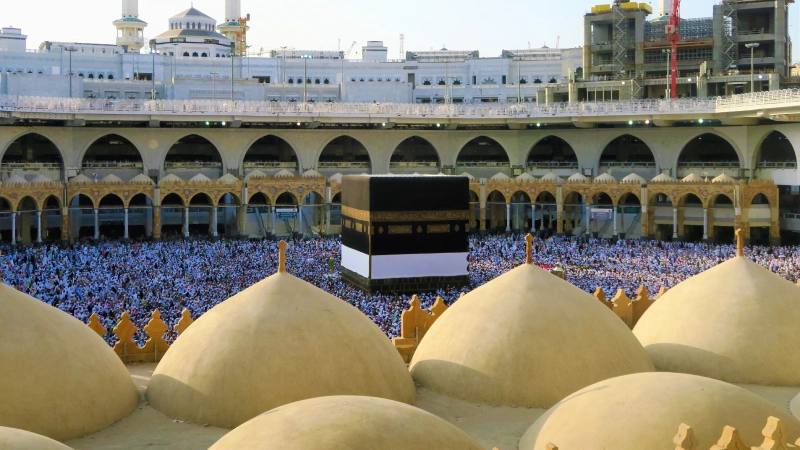
What Is Haram in Hajj? Important Prohibitions Every Pilgrim Should Know
Hajj is one of the five pillars of Islam and one of the greatest journeys of worship in a Muslim’s life. Allah says that pilgrimage to the House is due to Allah from those who can find a way to it. During Hajj and Umrah, a pilgrim enters ihram, a sacred state with specific rules and prohibitions. These prohibitions are not meant to create hardship. Rather, they train the believer in obedience, self-control, humility, and devotion. (Islam-QA)
Many people ask, what is haram in Hajj? The clearest answer is this: once a person enters ihram, certain actions become forbidden until the proper stage of ihram release. Some of these rules apply to both men and women, while others apply only to men or only to women. (Islam-QA)
What Is Forbidden in Ihram?
The major prohibitions of ihram include removing hair, using perfume, sexual relations, intimate touching with desire, hunting game, and certain clothing restrictions. For men, wearing garments tailored to fit the body is forbidden. For women, wearing a niqab or burqa specifically in ihram is forbidden, though they should still observe modesty and cover when non-mahram men are present. (Islam-QA)
1. Cutting Hair or Nails
A pilgrim in ihram should not shave the head or remove body hair. Scholars also include clipping the nails among the prohibitions of ihram. This applies until the pilgrim reaches the proper point of release from ihram. (Islam-QA)
2. Using Perfume or Fragrance
It is forbidden to use perfume after entering ihram, whether on the body or clothes. This includes direct use of scent and the intentional application of fragrance products. (Islam-QA)
3. Wearing Tailored Clothing for Men
Men in ihram should not wear shirts, trousers, turbans, or other garments tailored to fit the body or part of it. This is what scholars mean by “sewn garments” in this context. It does not mean every stitched cloth is forbidden. It means fitted clothing, such as shirts and pants. (Islam-QA)
4. Covering the Head for Men and Wearing Niqab or Burqa for Women
Men in ihram should not cover their heads in the prohibited way. Women, on the other hand, should not wear a niqab or a burqa while in ihram. However, if non-mahram men pass by, they may lower a covering over the face. (Islam-QA)
5. Sexual Relations and Intimate Acts
Sexual intercourse is one of the gravest prohibitions during ihram. Intimate touching with desire is also prohibited. Allah says there should be no sexual relations, no sin, and no disputing during Hajj. (Islam-QA)
6. Marriage Contract or Proposal
A pilgrim in ihram should neither contract nor propose marriage. The period of ihram is meant to remain focused on worship and sacred devotion. (Islam-QA)
7. Hunting Land Game
Hunting or killing game while in ihram is forbidden. This ruling is mainly about hunted land animals, not every living creature without distinction. There are harmful animals that may be killed for safety. IslamQA notes that sea game is allowed, and certain harmful creatures are excluded from the normal hunting prohibition. (Islam-QA)
This is why the line “you cannot kill birds, insects, or animals, even if they are small” is too broad if stated without qualification. The more accurate wording is that hunting game is forbidden, while harmful creatures may be killed when needed. (Islam-QA)
8. Fighting, Arguing, and Sinful Conduct
Hajj is not only about physical rituals. It is also about character. Pilgrims must avoid sin, harsh arguments, bad language, and wrongful behavior. Good manners, patience, and self-restraint are central to a beautiful Hajj. (Islam-QA)
Why These Prohibitions Matter
The prohibitions of ihram teach the pilgrim to leave comfort, vanity, desire, and conflict behind. They help create a state of spiritual focus and remind the pilgrim that Hajj is a journey of surrender to Allah, not just a movement from one place to another. Official Hajj guidance from Nusuk presents the rituals as a structured journey of worship with clear stages and rules. (Nusuk Portal)
Important Clarification
Not every mistake in ihram has the same ruling. Some violations require expiation, some may be excused due to ignorance or forgetfulness, and some are more serious than others. IslamQA notes that if a person does one of these prohibited acts out of forgetfulness, ignorance, or compulsion, the ruling is not the same as for deliberate violation. (Islam-QA)
Conclusion
If you want to know what is haram in Hajj, the answer is mainly found in the rules of ihram. A pilgrim must avoid removing hair, clipping nails, using perfume, sexual intimacy, hunting land game, and certain clothing violations. Men should avoid tailored garments and prohibited head coverings, while women should avoid the niqab and burqa during ihram, while still maintaining modesty. (Islam-QA)
A sincere pilgrim should learn these rules before traveling so that Hajj is performed with knowledge, dignity, and care. Protecting your ihram means protecting the beauty and reward of your Hajj. (Islam-QA)